North vs South SLO County: The Microclimate Shock!
How is coastal living different from inland living in San Luis Obispo County?
Coastal communities like Pismo Beach, Grover Beach, and Oceano typically stay in the upper 60s to mid-70s in summer, with fog during May Gray and June Gloom, while the inland valleys across the Cuesta Grade regularly reach the 90s. On the same afternoon, the difference can be 30 degrees. That gap affects more than comfort: coastal homes face salt-air maintenance, inland homes carry higher cooling and irrigation costs, and wildfire exposure and insurance premiums vary property by property.
By Patrick Raymond | November 1, 2026
If you've looked up San Luis Obispo County weather online, you've probably seen some version of "70 degrees and sunny, year-round." That number hides the most important thing about living here.
There is no single SLO County climate. On a summer afternoon you can leave Pismo Beach at 65 degrees, drive inland over the Cuesta Grade, and step out of the car into 95-degree heat — a 30-degree swing without leaving the county.
That difference shapes more than your comfort. It changes your electricity bill, your landscaping, your home maintenance, and even what it costs to insure the house. After more than two decades of reading Central Coast properties through an appraisal background, I've learned that choosing a home here also means choosing a climate.
Why San Luis Obispo County Has Two Climates
The Santa Lucia Range runs through the county and draws a natural line between the coastal communities and the warmer inland valleys. If you've driven Highway 101 between San Luis Obispo and Atascadero, you've crossed it at the Cuesta Grade.
The Pacific does the rest. Cold ocean water creates the marine layer — the low clouds and fog that roll over the beaches and coastal neighborhoods. The mountains limit how far that cool air reaches, while valleys farther from the coast heat up quickly under the summer sun.
So the real comparison is coastal versus inland, not just north versus south. Some communities in the northern part of the county sit right on the water and stay cool, and San Luis Obispo itself usually lands somewhere between the two extremes. That's why the specific neighborhood matters more than the city name on the listing.
The table below compares coastal South County, the in-between communities, and inland North County across seven criteria that matter most to Central Coast homebuyers. North County appears as a comparison point.
| Criteria | Coastal South County (Pismo Beach, Shell Beach, Grover Beach, Oceano) | In-Between (San Luis Obispo, Arroyo Grande, Nipomo Mesa) | Inland North County, for comparison (Paso Robles, Templeton, Atascadero) |
|---|---|---|---|
| Typical summer afternoons | Upper 60s to mid-70s | Warmer and sunnier than the beach; varies by neighborhood | 90s, with hot spells past 100 |
| Winter nights | Mild | Cooler than the coast; varies by elevation | 20s to 30s, with frost |
| Marine layer | May Gray and June Gloom; some days it doesn't clear | Often burns off earlier than at the beach | Limited — the mountains hold most of it back |
| Day-to-night temperature swing | Small | Moderate | Large |
| Air conditioning use | Low | Varies by location | High in summer |
| Main exterior maintenance concern | Salt-air corrosion on paint, metal, windows, and HVAC | Varies by distance from the ocean | Irrigation and landscape upkeep on larger lots |
| Wildfire exposure | Varies by property; coastal hillsides and wooded areas can carry real exposure | Varies by property | Varies by property; can be higher near dry vegetation and open space |
The pattern is clear: the coast trades heat for fog and salt, and the inland valleys trade fog for heat and bigger temperature swings. Neither one is better — they just cost different things.
Coastal Living from Pismo Beach to Nipomo
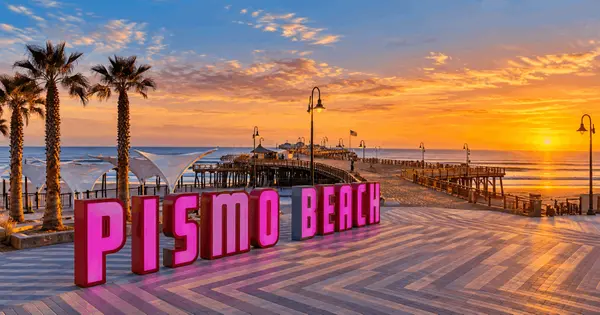
In Pismo Beach, Shell Beach, Grover Beach, Oceano, Arroyo Grande, and Nipomo, the Pacific acts like a natural air conditioner. Many coastal neighborhoods see summer temperatures in the upper 60s to mid-70s, with milder winters than the inland valleys.
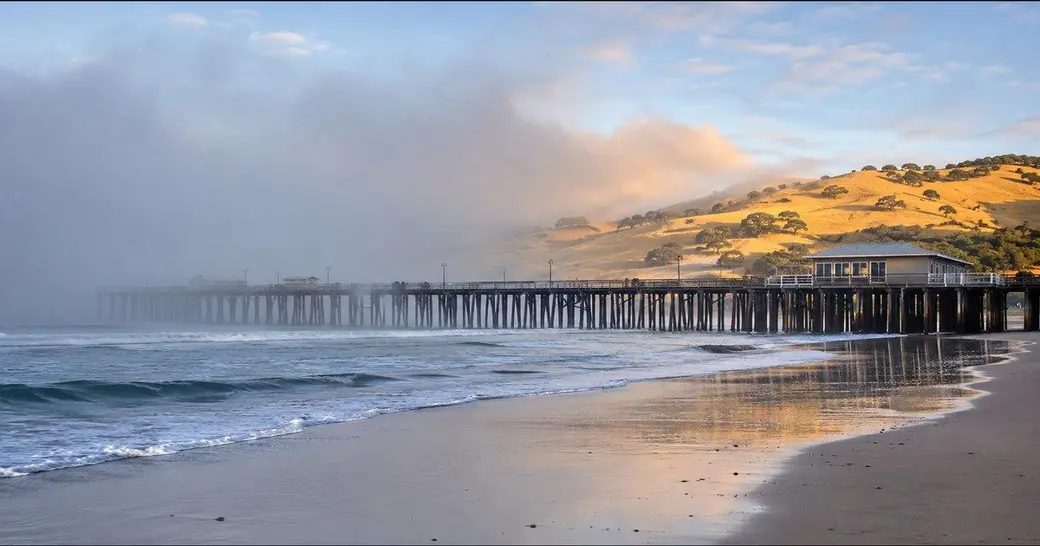
The trade-off is the marine layer. Locals call it May Gray and June Gloom — fog that moves in overnight and sometimes doesn't clear until lunch. On some days it doesn't clear at all.
Move a few miles inland and the picture changes. The eastern portions of Arroyo Grande and some neighborhoods on the Nipomo Mesa may be warmer and sunnier than the beachfront communities, though wind, elevation, and the marine layer all play a part. Even within Pismo Beach, a home near the sand can feel different from one farther uphill.
My advice is the same for every buyer we work with: visit the neighborhood in the morning, then come back in the afternoon. Don't ask what the average temperature is for the city. Ask what the weather feels like at the property itself.
Inland North County: The Comparison Point
Over the Cuesta Grade, Paso Robles, Templeton, and Atascadero offer wine country, open space, oak-covered hills, and more distinct seasons. They sit outside our core service area, but they're the clearest way to see what inland living means.
Summer is the headline. Paso Robles regularly sees afternoon highs in the 90s, with hot spells past 100 degrees. Warm afternoons are often followed by much cooler evenings, so a day at the pool can end with a light jacket.
Winter flips the script. Overnight lows can drop into the 20s and 30s, with frost on lawns and rooftops. For buyers who want four seasons without months of snow, that's appealing. Larger lots also bring space and privacy that are harder to find near the beach — along with more landscaping, more irrigation, and higher summer cooling costs.
What Each Climate Costs to Own
Here's what I want every buyer to hear: two homes with nearly identical purchase prices can have noticeably different monthly operating costs. Over five or ten years, that gap adds up.
- Utilities: Long stretches of inland heat mean more air conditioning, and large lawns or extensive landscaping add irrigation costs. Coastal homes typically use far less air conditioning.
- Salt air: Ocean breezes carry salt that's hard on exterior paint, metal fixtures, door hardware, windows, and outdoor equipment. Outdoor HVAC components near the ocean may need extra attention because of corrosion.
- Landscaping: A half-acre inland lot gives you privacy and outdoor living space, but it takes more water and more work. A smaller coastal lot may need less irrigation but more attention to moisture and exterior upkeep.
With my appraisal background, I read a home's condition through this lens. Deferred salt-air maintenance on the coast and tired irrigation and landscaping inland both show up in inspections and in how buyers judge a home.
So the question shouldn't only be "Can I afford this house?" It should also be "What will it cost me to comfortably live in this house?" Your specific numbers depend on the home's location, condition, and systems — that's where a local market analysis comes in.
Wildfire Exposure and Insurance
Homeowners insurance has become one of the biggest variables in a California purchase. Some inland communities carry greater wildfire exposure because of dry vegetation, terrain, and surrounding open space.
Don't assume the coast eliminates that risk. Coastal hillsides and wooded neighborhoods can carry significant exposure too. Insurers evaluate each property with their own risk models, so two houses in the same community can receive very different quotes.
In some situations, homeowners turn to the California FAIR Plan, paired with a difference-in-conditions policy for the protections the FAIR Plan doesn't include. That's why we advise our clients to get an insurance quote early — before they fall in love with a house, not after. A higher premium changes the total monthly payment, and in some cases availability shapes the decision itself.
Three Questions to Choose Your Climate
- Do you enjoy hot summer afternoons, or cooler weather year-round? If you prefer an ocean breeze, coastal walks, and milder temperatures, Pismo Beach, Shell Beach, or Grover Beach may fit. If you want sunshine and warm evenings, the inland valleys are worth comparing.
- How much outdoor maintenance do you want? Larger inland lots need more landscaping, irrigation, and upkeep, while homes near the ocean bring their own salt-air maintenance.
- What does your ideal week look like? Beach walks, coastal trails, and dinner near the water point one way; wineries and rural drives point another. If you want a little of both, Arroyo Grande, Nipomo, and San Luis Obispo offer a middle ground.
Whatever you lean toward, visit more than once and in more than one season if you can. A July afternoon won't tell you what a winter morning feels like, and a January visit won't prepare you for June Gloom. The goal is a home you'll enjoy twelve months of the year.
Frequently Asked Questions
Is it really 70 and sunny year-round in San Luis Obispo County?
Not everywhere. Coastal communities like Pismo Beach and Grover Beach often stay in the upper 60s to mid-70s in summer but see fog during May Gray and June Gloom, while San Luis Obispo and Arroyo Grande usually run warmer. The climate you get depends on the specific neighborhood, not the county average.
How much hotter is inland SLO County than the coast?
On a summer afternoon, the gap can reach about 30 degrees — 65 degrees at the beach and 95 inland. Paso Robles regularly sees highs in the 90s with hot spells past 100, and inland overnight lows can drop into the 20s and 30s in winter.
Does salt air affect home maintenance on the Central Coast?
Yes. Salt air near the ocean is hard on exterior paint, metal fixtures, door hardware, windows, and outdoor HVAC components. Coastal buyers in San Luis Obispo County should budget for more frequent exterior upkeep, even though they'll typically spend less on air conditioning.
When should I get a homeowners insurance quote when buying in SLO County?
Get a quote early in the buying process, before you're committed to a house. Insurers rate each property individually, so wildfire exposure, terrain, and vegetation can produce very different premiums for homes in the same community, and some buyers need the California FAIR Plan plus supplemental coverage.
In San Luis Obispo County, choosing a home means choosing a climate — and that choice affects your comfort, your utility bills, your maintenance, and your insurance costs. The best fit matches the location, the lifestyle, and the long-term cost to what matters most to you.
That's exactly the kind of question we walk our clients through before they ever write an offer. We'll help you compare neighborhoods by how they feel at the property, not just by the numbers on a weather app.
Considering a move to San Luis Obispo County? Explore our free Central Coast Relocation Guide: raymondteamre.com/the-central-coast-relocation-guide
Ready to talk through your situation? Schedule a meeting with the Raymond Team — call us at 805-201-6341, or book a Zoom at book.raymondteamre.com.
About Patrick Raymond
Patrick Raymond brings a rare edge to real estate: an appraisal background backed by 24 years of experience. It defines how he approaches pricing, market shifts, and true property value — grounded in data, not assumptions. He also guides clients through complex 1031 exchanges, with a sharp focus on timing and reinvestment strategy. Serving San Luis Obispo County, Patrick brings clarity to complex decisions — because in real estate, the numbers always matter.
Categories
Recent Posts